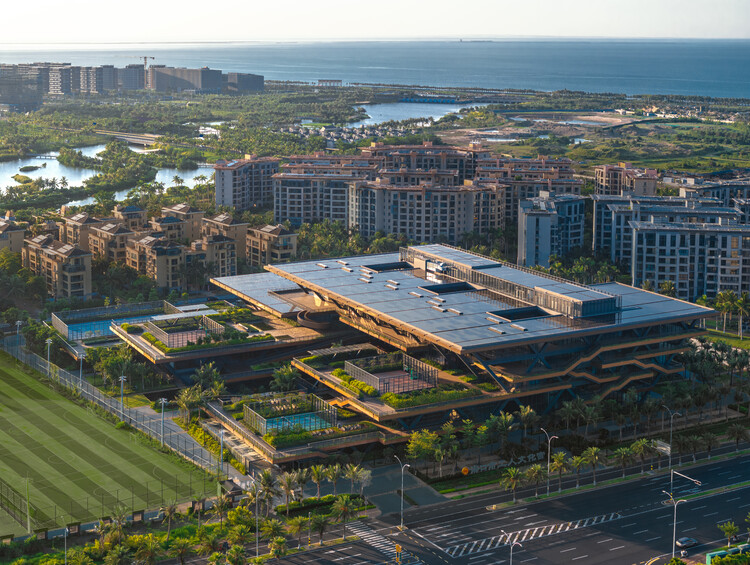
This architecture and interior design briefing examines two projects that turn shared spaces into active experiences: CADG’s climate-responsive civic complex in Haikou and UAL’s guest apartment filled with student work. Together, they offer photographers contrasting lessons in documenting environmental strategy, material detail and inhabitable design.
Haikou Workers’ Activity Center (Workers’ Cultural Palace) / CADG
CADG’s newly completed Haikou Workers’ Activity Center responds to Hainan Island’s hot, humid coastal climate through an “Ecological Settlement” organized around the idea of a “Tree of Life.” Designed by the firm’s Green Architecture Design & Research Institute, the civic complex combines cultural, sports and training programs while presenting itself as an urban oasis for the community. The project is intended to operate with a low-carbon, climate-responsive approach rather than functioning as a neutral container for activities. For photographers, the key subject is the relationship between architecture and climate: images should look for how the complex’s settlement-like organization communicates shade, openness, vegetation and collective use. Ji Li and Schran Image are credited for the project photography.
UAL turns Atterbury Flat guest apartment into riotous student design archive
The University of the Arts London has transformed the two-bedroom Atterbury Flat at Chelsea College of Arts into a live-in archive of student and graduate design. The Grade II listed former Royal Army Medical College building previously hosted visiting professors and dignitaries; now visitors can eat, sleep and bathe among the work. Lecturer Zoë Tynan-Campbell, with alumni Abigail Rigby and Bhairavi Yogasivam, worked with more than 400 students and graduates from 58 courses and acquired 117 pieces. The collection includes a colour-changing chair, a 160-kilogram paper coffee table, refillable soap, foldable hangers and Indian river-clay cookware, alongside bespoke green bathroom tiles and a matching sink. Photographers should treat the apartment as an inhabited exhibition, balancing overall room compositions with close studies of objects in use.