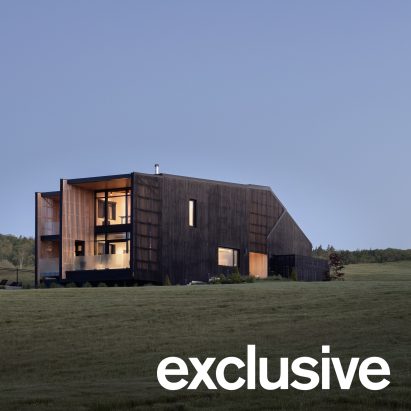
This architecture and interior design briefing connects two very different approaches to reading place: RHAD Architects’ waterfront house, shaped from mass-timber volumes and carved voids, and Asmara’s preserved modernist urban fabric. For photographers, both stories highlight how material, geometry, climate and historical context shape architectural images.
RHAD Architects gives Nova Scotia house "quiet, monolithic presence"
RHAD Architects has completed Two Bay House on a family estate in Cape Breton Island, Nova Scotia, using two simple blocky masses as the starting point. The design carves voids from those volumes, combines mass-timber framing with blackened wood cladding, and creates what the studio describes as a quiet, monolithic presence beside the water. The contrast between heavy-looking forms and the expressed timber structure offers several photographic readings: broad compositions can emphasize the house’s silhouette and carved openings, while closer views can isolate the charred cladding, joints and transitions between solid and empty space. For architectural photography, the project rewards careful observation of how material texture and negative space establish scale and atmosphere.
Asmara Heritage Project: Documenting a Colonial Project that Became Eritrea's National Symbol
Asmara, Eritrea, is recognized for a modernist urban landscape shaped by colonial construction and later protected from extensive redevelopment through a long period of relative isolation. The capital stands more than 2,300 metres above sea level on a plateau near the Great Rift Valley escarpment, and in July 2017 UNESCO inscribed it as “Asmara: A Modernist African City.” It was the first modernist urban site listed in its entirety and Africa’s first explicitly modernist World Heritage Site. The heritage story also includes local craftsmanship and the city’s earlier identity as a highland settlement connected to trade routes toward Massawa. Photographers documenting Asmara should therefore look beyond isolated façades, recording the relationship between modernist forms, streetscapes, altitude, and living historical context.