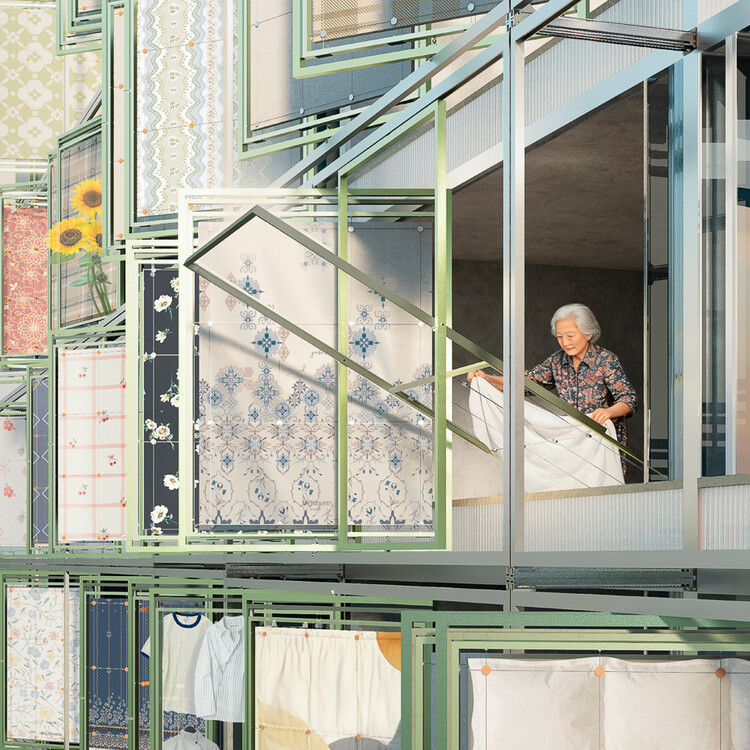
This architecture and interior design briefing examines two ways material and daylight shape photographic subjects: a responsive facade that turns a domestic ritual into a climate-sensitive system, and a major ceramic design competition now accepting submissions. Together, they offer practical cues for reading adaptability, texture and use in built spaces.
“Sun the Quilt” Wins the 2026 VELUX Light of Tomorrow Global Award with a Responsive Facade Inspired by Daily Rituals
“Sun the Quilt,” by students from Xi'an University of Architecture and Technology, has won the 2026 VELUX Light of Tomorrow Global Award. The project transforms drying quilts and household objects into the operating principle of a responsive facade. A fully openable window, ledge and nested, extendable, rotatable frames support drying, shading, ventilation and daylight control while residents remain indoors. Seasonal and daily solar studies determine how the system changes: a deployed quilt becomes an exterior shade, while retraction restores light inside. Research into improvised drying devices in the Yangtze River Delta informed the design. For photographers, the project offers a clear subject that changes with sun angle, textile position and facade movement, making time, climate and domestic use central to documenting the architecture.
Twenty-fifth edition of Tile of Spain Awards opens for entries
The twenty-fifth Tile of Spain Awards has opened for entries, inviting creatives to submit architecture and interior design projects that demonstrate innovative uses of Spanish-made ceramic tiles. The annual competition recognizes outstanding work in Spain and internationally, with separate attention to architectural and interior applications. The announcement is especially relevant to photographers because ceramic surfaces can define an image through pattern, scale, reflectivity and the way they respond to natural or artificial light. A strong submission will therefore depend not only on the project’s design, but also on photographs that make the tile’s role legible within the space. When documenting eligible work, show how the Spanish ceramics support the overall architecture or interior rather than treating them as isolated finishes.