Today’s projects examine how architecture can transform existing urban conditions and sharpen everyday domestic experience. In Lisbon, an industrial shell becomes housing organized around shared outdoor spaces; in New Delhi, a residence is conceived through the movement of light and air. Together, they foreground reuse, courtyards and environmental experience as design drivers.
Junqueira 307 Apartments / Fragmentos
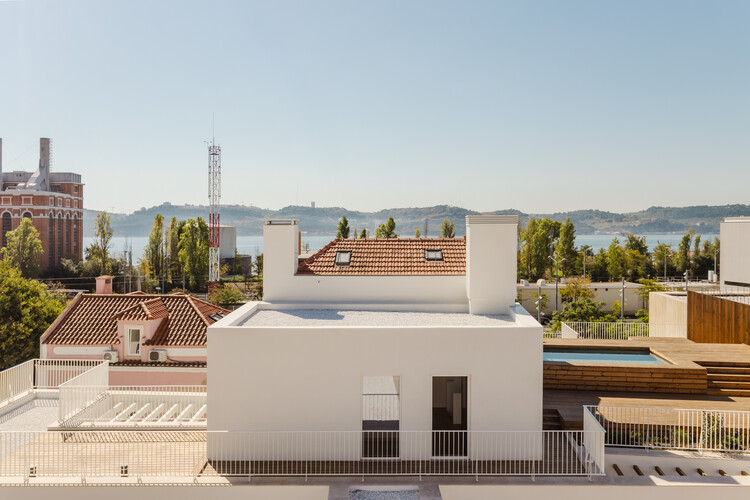
On Lisbon’s Rua da Junqueira, Fragmentos has rehabilitated and extended a former warehouse and plastics shop known as Mitera into the Junqueira 307 residential complex. The site occupies the historic waterfront corridor between Alcântara and Belém and had remained vacant and industrial for years. The new housing is organized around courtyards and terraces, with a shared rooftop pool adding a communal destination above the converted structure. Commissioned by developer Groom Invest, the project also sits immediately beside Quake – Museu do Terramoto, another Fragmentos project. For architects, it offers a clear case of residential reuse shaped by layered urban context and collective outdoor space.
Lighthouse Residence / Architecture Discipline
Architecture Discipline’s Lighthouse residence in New Delhi approaches domestic design through the interaction of light, air and landscape rather than through excess. The project challenges conventional urban living by treating natural elements as fundamental forces that guide the home’s spatial experience. This makes environmental presence the organizing idea: daylight, airflow and the surrounding landscape are not secondary effects but active participants in how the residence is conceived. For architects and interior designers, the project’s central proposition is a reminder that residential luxury can be framed through sensory and climatic relationships, using the movement of natural elements to shape the experience of built space.