Can Sigma's 50-120mm f/2.8 Replace Fujifilm's Pricey Telephoto Zoom?
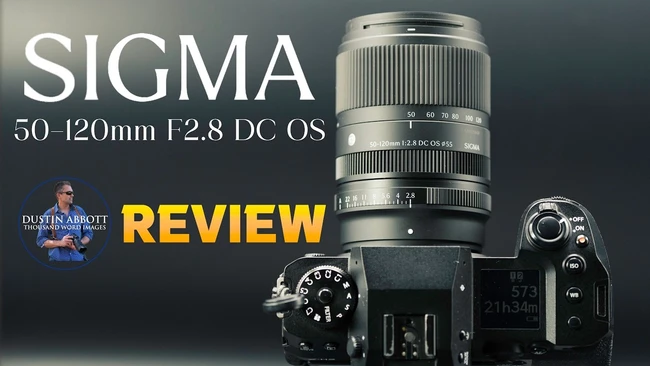
Sigma’s 50-120mm f/2.8 DC OS Contemporary brings a bright APS-C telephoto zoom to Fujifilm X, Sony E and Canon RF. Tested on a Fujifilm X-H2, it weighs 390g—less than half the 995g Fujifilm XF 50-140mm—and costs $799, while giving up 20mm at the long end. Stabilization is rated at 6.5 stops at 50mm and 4.5 at 120mm; weather sealing, an HLA autofocus motor and close focusing add practical value. The lens is not parfocal, and strong correction is needed for vignetting at 120mm. For compact APS-C kits, its main advantage is keeping a constant f/2.8 telephoto range without the bulk of the first-party alternative.
Tamron 16-50mm f/2.8 A Review: Pro-Level Zoom at an Entry Level Price
Tamron’s 16-50mm f/2.8 A fills a useful APS-C standard-zoom gap across Fujifilm X, Nikon Z, Sony E and Canon RF. The $549 lens weighs 305g, accepts 55mm filters and uses a VXD linear voice-coil motor that delivered fast, accurate focusing in testing. It is fully sealed and connects to Tamron’s app through USB-C, but has only zoom and manual-focus rings—no aperture ring or customizable buttons. Close focusing is useful for framing backgrounds at either end of the range, though its 1:4.5 to 1:4.8 reproduction is not macro. It suits photographers seeking a light, fast everyday zoom without pro-level bulk or pricing.
The best Sony lenses in 2026 for photography and video
A current guide to Sony E-mount lenses covers options for both full-frame and APS-C mirrorless cameras, with photography and video included in its scope. Its significance is less about one new release than about navigating a large system: Sony shooters can assess lenses according to sensor format and intended use rather than treating every E-mount lens as interchangeable. For photographers building or refining a kit, that distinction helps prevent mismatched purchases, particularly when a full-frame lens adds unnecessary size to an APS-C body or an APS-C lens limits a full-frame setup. The practical task is to match focal range and format to the camera and work.