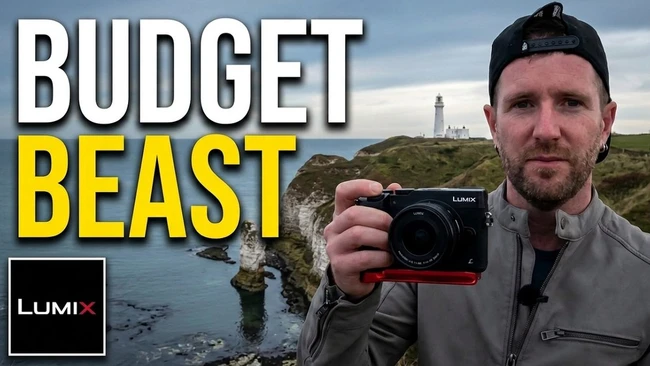
Can a Used Lumix GX8 and Kit Lenses Still Deliver on the Coast?
A decade-old Panasonic Lumix GX8 remains a credible low-cost option for landscapes, family outings and other subjects that stay still. At Flamborough Head, Chris Baitson pairs the 20-megapixel Micro Four Thirds body with Olympus 9-18mm, 14-42mm and 40-150mm lenses, using aperture priority and highlight-conscious exposure in difficult coastal light. The GX8’s rangefinder-style handling and tilting electronic viewfinder appeal, while its older sensor gives up speed, autofocus tracking, high-ISO cleanliness and computational features found in newer bodies such as the OM-1 Mark II. Used prices cited are about $470 for the body, $335 for the wide zoom and $100 for the 14-42mm. For static subjects, the saved money may be better directed toward lenses.
I Have a Confession to Make About My Landscape Photography
A landscape photographer’s recent trip to New Hampshire challenges the assumption that wide-angle lenses are the natural choice for expansive scenes. Using Sony’s FE 400mm f/4.5 GM OSS on an a7R VI, he made 16 of 20 selected images with the 400mm after shooting 134 frames. The remaining four came from the FE 24-105mm f/4 G, used between 43mm and 105mm. He acknowledges that 24-70mm, 24-105mm and 24-120mm zooms remain essential parts of a landscape kit, but says his preferred images often come from roughly 40-100mm and longer. The practical lesson is to judge focal length by your strongest compositions, not by landscape conventions.
Is the death of the DSLR the biggest market misstep of the 21st Century?
John Bridges argues against the industry’s move from DSLR cameras to mirrorless systems, framing the transition as a possible major market mistake. The supplied discussion is presented as an opinion piece rather than a product announcement or a specification-led comparison, and its central position is clear: Bridges is not persuaded that mirrorless represents an uncomplicated improvement over DSLRs. For photographers considering a system change, that makes the question broader than autofocus or new-model features. It calls for examining the reasons behind the switch and weighing the practical benefits against the costs of replacing an established kit. The useful takeaway is to treat migration as a decision, not an automatic upgrade.