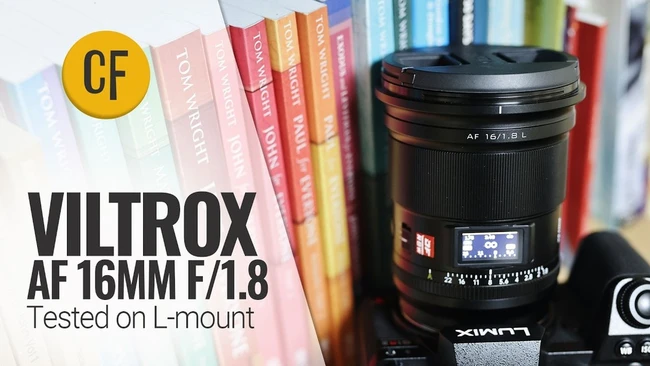
Viltrox Brings Its 16mm f/1.8 to L-Mount
Viltrox has released its AF 16mm f/1.8 for L-mount, making the $580 ultra-wide available for Panasonic, Leica and Sigma bodies. The lens combines autofocus, weather sealing, a 77mm filter thread, a focus-distance display and a USB-C port for firmware updates. Its aperture ring can click in third-stop steps or turn smoothly, while the metal construction adds weight. In testing on a Panasonic Lumix S1R II, autofocus was silent and accurate but only average for fast action. The bright f/1.8 aperture is particularly useful for night skies, interiors and dim venues, reducing the ISO required compared with f/2.8. Real-world corner sharpness was strong at normal distances, and the focus display can help return to infinity in darkness. Photographers should use slim filters to avoid vignetting and remember that the lens has no optical stabilization.
ShiftCam and Apple Partner on New ProRig for iPhone
ShiftCam has announced ProRig, a unified camera system built around the iPhone and scheduled to launch first through the company’s tenth Kickstarter campaign later this month. ShiftCam says Apple partnered directly on the product and provided feedback during development, an unusual arrangement for the company. ProRig is designed to bring together the company’s iPhone case, add-on lenses, filters, handles, lights, microphones and support accessories. Demonstrated configurations range from a lightweight lens-and-handle setup to a tripod-mounted production rig with a filter, shotgun microphone and light. The system’s price has not been announced. ShiftCam’s V.Series lenses start at $199 and X.Series telephoto lenses at $269, though both require a ShiftCam case. For mobile filmmakers, the practical promise is a consistent mounting and accessory system; the cost and final component details will determine how broadly it fits existing kits.
Why your sense of camera prices might be out-of-date
The supplied report questions whether photographers’ sense of camera and lens prices is still current, arguing that equipment can appear more expensive than ever even though much of the pricing is outside manufacturers’ control. It does not identify a particular camera, lens, price, market or policy change, so the central takeaway remains a framing issue rather than a product announcement. For photographers planning an upgrade, that distinction is useful: a perception of rising prices should be tested against the specific equipment, market conditions and alternatives being considered instead of treated as a universal measure. Without more concrete figures, the report supports caution about broad conclusions. The practical implication is to compare complete system costs and actual shooting needs before deciding that a purchase has become unaffordable.