Lens Flare and The Incredible Physics of Modern Lenses
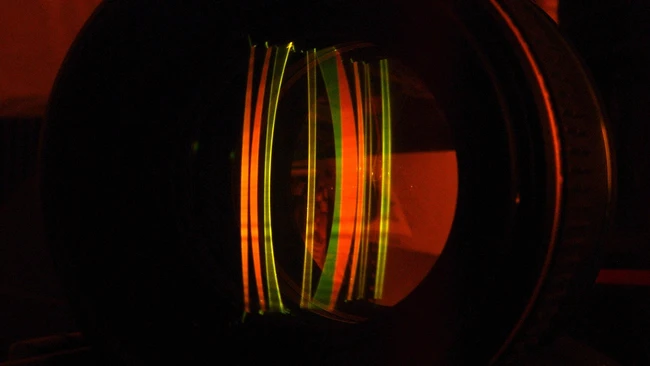
Lens flare is the visible result of light taking unintended paths through a lens. A bare air-to-glass surface reflects roughly 4 percent of incoming light, and the Sony FE 24-70mm f/2.8 GM II contains 20 elements in 15 groups, creating about 30 relevant air-to-glass surfaces. Coatings and cemented groups reduce those reflections, but remaining bounces can create ghosts, rings and veiling glare. Ghosts often follow the line from a bright source through the frame’s center; aperture-shaped reflections become polygonal when stopped down, with the GM II’s 11-blade diaphragm producing 11-sided forms at small apertures. Sensor reflections can add further artifacts, especially with steep rear-element light paths. For practical control, study the source position, aperture and composition rather than treating flare as random contamination.
A new OM System camera’s being teased – I believe if it did make a true Olympus Trip 35 in digital form, it could be a Fujifilm X100VI killer
OM System is reportedly preparing a new PEN, with a separate suggestion that it could borrow design ideas from the Olympus Trip 35. The material does not confirm a product, specifications, release date or price; it presents the Trip-inspired concept as an opinion about what the company might introduce. The proposed appeal is a compact, simplified camera with enough character to compete for attention among retro-styled models such as the Fujifilm X100VI, while preserving the less-is-more approach associated with carrying a smaller kit. That distinction matters: the story is about a possible direction, not an announced camera. Photographers considering compact systems should therefore judge the idea by its handling, lens and sensor details only if OM System confirms them.